Ok, I confess, I went to a public school. I admit it. It feels such a relief to say so. This is a meeting of élitist anonymous, isn’t it?
Obviously, this was not my choice, but that of my parents. Obviously, I was too young to understand the social and class implications of the school, but that’s true of any upbringing. Even so, I’d have liked to have had an input in the decision, as much as an eight year old can give input.
My father wanted his sons to go to my school, Bedford School. My mother respected his wishes. He died when I was six years old, long before I could talk to him about it. Apparently, maybe when he was in the military, maybe afterwards, he’d been impressed by a couple of lads who went to the school. I can see his point (now): the school slogan is to educate boys so “that they be good men”.
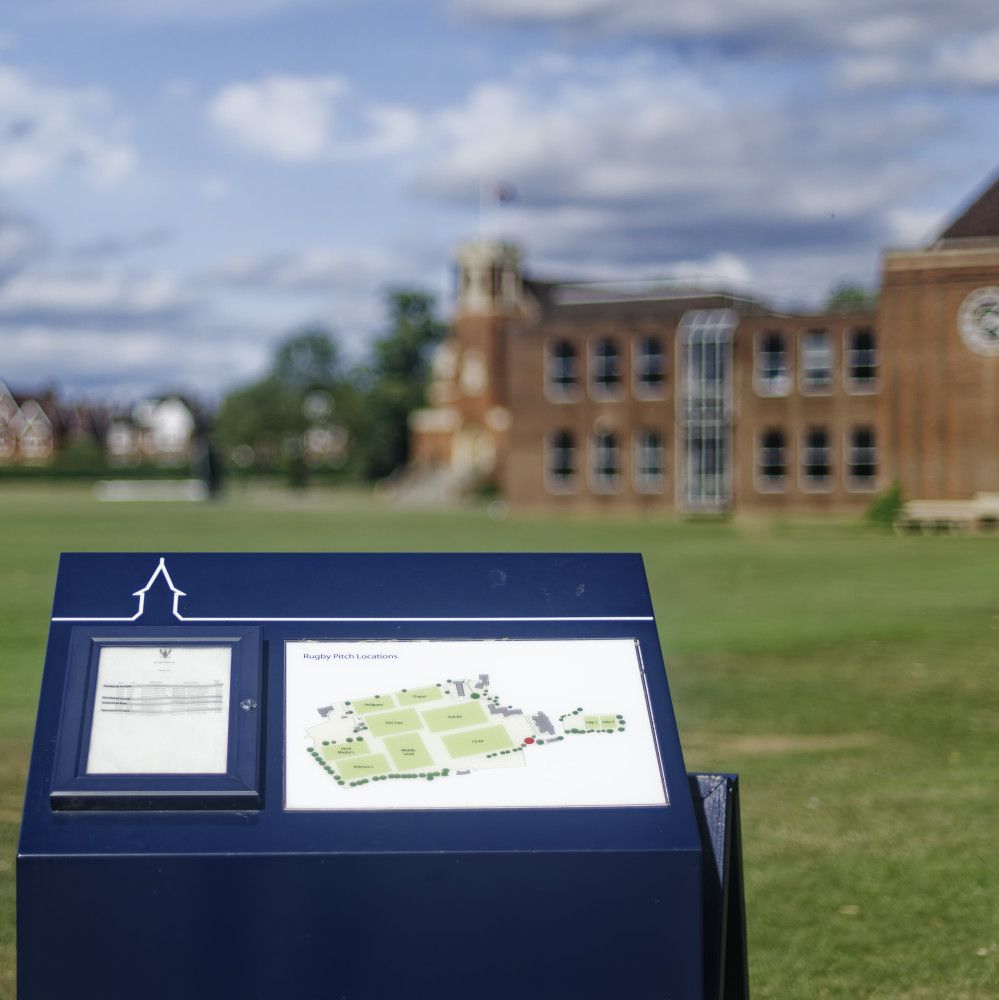
I didn’t really appreciate the school when I was there. Well, to be honest, how could I compare it with anything else? But now I’ve come to appreciate it a lot.
I was a middling pupil. The best guys left for oxbridge. The worst left for work. I escaped to poly.
I spent many years after school trying to escape it’s middle class grift. I wanted to present as classless (rightly), and was able, I think, to achieve that. I’ll never lose my childhood, rather obviously, but I can and have moved beyond it, although it does sometimes growl from behind the barbed wire.
In the 50 years since I left, I have gained a peace from the place. And, given it’s exactly fifty years, it’s hardly surprising that there was a celebratory dinner at the school for pupils of my year (and anyone else connected who wanted to come along). So, last weekend, I went back for the first time in half a century. There were quite a few other ex–pupils (Old Boys in the parlance) in the same situation.
We were given a tour of the school, which regretfully omitted the Inky, the block for younger boys. It’s the same home of élite education, it’s the same feel, same atmosphere, yet it’s changed significantly.
A number of buildings were renovated or replaced. There is a new library, a theatre (cue envy), a planetarium, an indoor swimming pool: it’s all rather impressive. The main building was renovated after it was burnt down by an opportunist arsonist. The science block was no longer rooms of dark wood stained and burnt by irregular mishaps, of test tubes and bunsen burners, of teachers with singed eyebrows. It’s rebuilt, bigger, and cinder–free.
In this science block, in the early 1970s, my chemistry teacher introduced his chemistry class to global warming. I didn’t like the idea, I didn’t believe it, so I argued against it, which is why I remember it (I was a wimp, I rarely argued with teachers). Of course, he was right. This memory gives a lie to those reality deniers who claim global warming wasn’t mentioned anywhere before the 1980s. The same teacher also introduced us to the theory of black holes (I have no clue what that had to do with chemistry), which excited me! I didn’t really get on with the chap at the time, but I very much appreciate his enthusiasm for the sciences now. Shamefully, I’ve forgotten his name.
The school gave me my career. Extraordinarily, it had a computer (for fellow nerds, a bottom of the range DEC PDP–8/E). It had a computer club, where I cut my programming teeth. I was a pupil before the microcomputer revolution, so, then, the computing profession was a rare one: programmers were wizards. Now they’re everyone’s nerdy next door neighbours.

The school gave me the confidence to learn languages, oddly enough because I was so awful at them there. I got the worst possible result in French, and was thrown off the German course. But I also learnt that when I spoke foreign, people would laugh at my mistakes. I got used to that. Thus, once I left blighty, and tried to learn other languages, I had no fear of speaking, because I had no fear of causing giggles, because that was my norm. Thus I had no fear of giving the language a go. Now, I remain awful at languages, but I speak French more often than English, and have no great problem getting around in German and some of its sister languages: I can croak and grunt comprehensibly. I can even ask for dinner in Mandarin.
To give an example of my youthful linguistic awfulness, an annoyed teacher once said to me something along the lines of “oh, come on, Harris, say the French for ‘my name is Harris’”. He was looking for “Je m’appelle Harris”, but I replied “Je suis Harris”, a faux pas so awful that one of my fellow ex–pupils remembers it to this day, and gleefully reminded me of it last weekend!
The music school was rebuilt. That music school gave me a lot: I was taught the tuba, aka bombardon E♭, by Mr. Guthrie, and ended up in the school orchestra, military band, and jazz band—not because I was particularly good, but because they all needed a tuba player and I was the only one! These courses gave me a deep appreciation of music, and ultimately led to my poetry (the English literature courses there didn’t do so; that side of me was yet to awaken).
But there is a real problem with the new music school. I understand it’s named for a teacher, a Mr. Amos (I was told about, but didn’t see, the plaque). This teacher, in front of many, including me, attacked a pupil. That wasn’t discipline, it was rage. The attack ended when another teacher, Mr. Witt, entered the room and stopped the assault. This episode is a shameful blot on the school, and the attacker should not be the receiptient of a dedication, no matter how much he otherwise gave to music education there.
What I didn’t like as a pupil, and for many years after, was the stigma of élitism the school gave. In some ways, this is ironic, since I have élitist tastes in the arts, both modernist music and contemporary modernist poetry. Don’t get me wrong, I also enjoy other forms of both, but I find the contemporary modernism the bees knees.
The school is strongly sports orientated. I hated sports. I am clunky, as much a sportsman as an eagle is a vegetarian. Now, of course exercise is essential for children, but my problem was, and is, with team sports, not exercise.
The school, understandably, left some things to parents, but I do wonder if that was good enough. Such matters would obviously be a delicate area for it to tread, but I would have benefitted from some delicate treading.
For example, the school did not help pupils suss the boy girl thing. It took me years after I left to realise that women aren’t alien magical creatures, just human beings who sometimes squeal. Yes, I had a sister and a mother, but they were a sister and a mother, not special magical creatures, so they didn’t count (yup, child logic). Some kind of gentle guidance on how to approach women would have been extremely useful, even if those leading the discussion would have to spend most of their time countering immature, seriously crappy, nervous jokes.
Something that happens here in Luxembourg, but didn’t happen in my day at school, is regular medical check–ups, once every two years, for children. Then, I only saw a doctor if something was wrong. Checking for things that didn’t feel problematic, but in fact turned out to be problematic in later life, was not done. I don’t know if that happens at the school now, but, if it doesn’t, I’t like to suggest the practice is introduced. It’s absence, then, has noticably dehanced my adult life.
I left school still a child. It was only in poly that I came to terms with my fear of difference, that I learnt how to control and manage, and ultimately defeat, that fear, and thus defeat my own bigotry—something many people never do. That wasn’t the fault of the school. I later became a lifelong vegetarian. That wasn’t the fault of the school. It was many years later that I gained some self–confidence. That wasn’t the fault of the school. It took years for my sense of humour to smooth into effective shape. That wasn’t the fault of the school. The school, and parents, did the groundwork, but it was for me to walk that ground, when I was ready. I changed, I grew up, as did all my fellow pupils, in their own way.
So I left school, and felt like I’d escaped school. I slowly learnt to present myself as classless. The years passed, and I mellowed. The school taught me music, and taught me superbly, and that turned into poetry, and eventually published collections. After 50 years, I felt able to return.
It was good to speak with people I’d not seen since I was little—admittedly, little in terms of width, not height. I’d forgotten many pupils, many faces, yet, to my surprise, recognised a few. Of course, we’ve all grown up: there was no more silly competition, there was a genial conviviality. My scars only blurted out once or twice.
Would I recommend the school for parents with boys? Well, presuming they can get past the money thing, or the child gains a scholarship, I’d certainly suggest they considered it. However, I’d also ask them to consider the whole public school system, and ask them if that’s what they wanted for their children. It provides a superb education, but if you send boys there, make absolutely sure they are also introduced to all parts of society, and ideally the world, not just the rich English bits. The school tries to do this, it must be said, but I don’t see how it could be much more than touching the edges: pupils see the poverty, they don’t experience it.
So, yes, after 50 years, I returned.